26 November 2006

Take a pledge on Obesity

Today being World Obesity Day, I’m sure there would be some kind of opinions voiced from anyone who wishes to offer their pennies on the subject! Especially when UAE has a substantial number of residents who are already on their way to obesity! (Perhaps on my part I already gave my pennies away… see here and here and here).

However, the question that bothers me continuously is: Are we really serious enough on this issue? Almost on every second day we see some article in the newspapers talking about the subject, or see some dietician or a health official commenting on the issue with some authority! But any kind of concrete solutions are almost none! No wonder that 20% of high school children are facing an obese future in UAE (based on a Global School based Health Survey in UAE – conducted by WHO, UNAid, UNICEF and Unesco)

Gulf news perhaps attempted for the umpteenth time to put some sense among the masses – by targeting school kids as the most important segment to be prevented from this pandemic this time. You can see the coverage here, here, here and here.

Here are some important facts and information tid-bits from Gulf News:

1. 50% of school children eat fruit and vegetable at least once a day. These are the ones who have been taught the benefits of healthy eating.

2. 12% of kids aged 12-16 yrs are already obese in UAE, while 20% + are under risk of being obese.

3. Boys are more obese than girls; however the trend reverses for overweight children.

4. 20% eat shawarmas, biryani, carbonated drinks or high fat food at least twice a day!

5. 18% eat fast food at least thrice a week!

6. 25% of children are found obese in UK

7. 17% of kids aged 2-19 yrs are obese and 34% are overweight in USA

8. 5.6% of young adults in China are obese, while 17.6% are overweight

9. Suggested Top ten brain foods for youngsters: Fish; Nuts and seeds; Soya products; Pulses; Wholegrains; Broccoli; Organic eggs; Cheese; Fruits; Ostrich meat.

Taking these as responsible parents, let us take a pledge to consciously to prevent our progenies being affected by this pandemic

12 November 2006

Roads to Compulsive Shopping

Further to my previous post on this blog, there’s additional evidence that UAE indeed encourages binge shopping.

An in-depth report in Gulf News today, quotes AC Nielsen that:
  1. UAE boasts the 2nd highest number of per-capita recreational shoppers in the world: 30% of the consumers in UAE go shopping “at least once a week” (compared to 36% in Hong Kong)
  2. 49% of UAE consumers regard clothes shopping as a necessity chore – the highest in the world! - 13% find it therapeutic to shop for clothes
  3. An average UAE shopper takes 4 shopping trips every week, making a purchase on 7 out of 10 visits to the mall
  4. An average UAE consumer spends 127 hours per year in supermarkets alone!

As mentioned earlier, there's an increasing trend towards recreational shopping in UAE. Within the recreational shoppers, chances are great that there are many for whom shopping is an obsession / compulsion.

Currently, per capita shopping area in Dubai is 4 times that of USA! With the new malls in place, when the overall retail space in UAE quadruples by 2010, there will be even more chances that more and more people in UAE would be induced to shopping as a recreation than a necessity – hence again contributing stimulus for “Compulsive Shopping”.

Apart from some ideas proposed before, what else can we do to avoid the disorder taking over?

What's the future of "Family"?

To be or not to be” - Hamlet’s famous dilemma could perhaps be well applied to the question of marriage and family today. With life becoming faster, and relationships more volatile, the dilemma of whether to have an arranged marriage or whether to sustain live-in relationships, is increasingly attracting more debate.

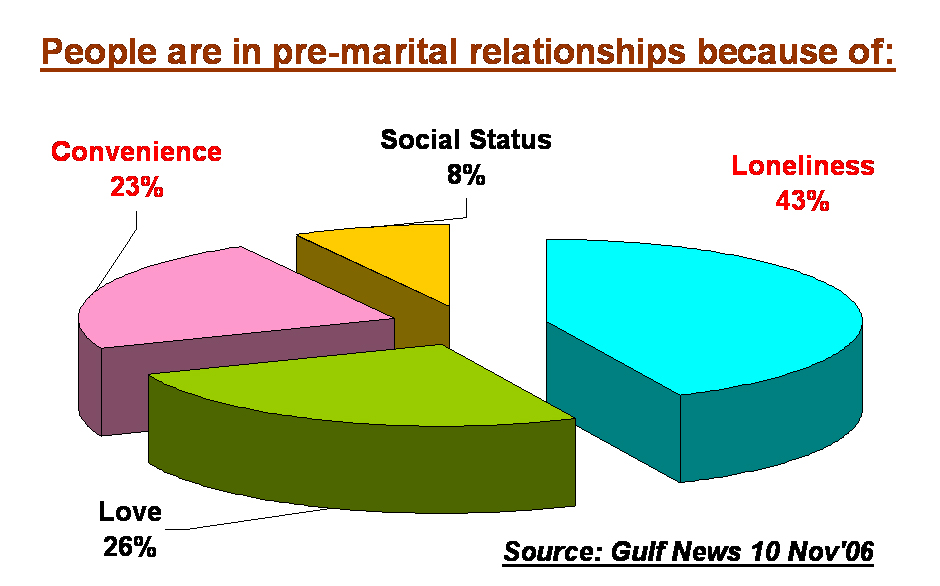
A recent report by Gulf News discussed the issue Pre-Marital relationship from the perspectives of various readers. As expected, it generated strong but mixed reaction. You can read them all here.

Why do people get into pre-marital relationships?
A Gulf News online poll indicated “loneliness” was the top reason (see pie chart). This may be true for a fast developing metro like Dubai, where there’s a substantial population of singles – who came here to shape their career and earnings. However chances are also great that most of these singles are into some kind of relationship with a similar partner – either in a live-in setting or otherwise.

In fact “live-in”, “single-mother” and “single-father” households are perhaps gaining in popularity worldwide. A recent US census indicated that for the first time in 6 years, marriage did not figure in nearly 50.2 % of American family households. It says that: “Unmarried couples gravitated toward big cities… while the farm states…and rural communities… remained bastions of traditionalism.”

Looking at the break-neck speed that Dubai is developing with, it wouldn’t be long when we’d see a similar trend here too. Modern lifestyle, Cost of living and Lengthy work hours force singles to indulge in casual, no-frills relationships, which stay away from getting married, just because responsibilities and social pressures of “married couples” are too much to cope up.

But since UAE law is based upon Shariah, how such relationships are allowed to exist in Dubai? Is it because another law discourages person to sponsor a married partner on basis of lower monthly income? Is there any trend that we’re looking at, but not accepting?

And talking of families, it is now a widely known phenomenon that - thanks to steep rise in rents and hence inflation - many of the middle-class households are breaking into singles – thus leaving the ground open for casual relationships among expatriates. Maybe soon we’d see “raising families” draw the least attention among priorities among Expats in Dubai. Again, is there anything we’re missing out here?

Your turn dear readers…

Price of Life!

Recently an Ajman court ruling on “sufficient compensation” for the death of a 5 year old schoolgirl immensely disturbed me. The court had refused the Indian parent’s claim of Dhs 3 million blood money, and thus ruled that Dhs 100,000 was a sufficient compensation.

The news started me thinking on some basic moral, judicial and human issues:

  1. How does one decide the price of a life? Especially a 5 year-old school girl?
  2. What would have been the case if the schoolgirl was a national? Definitely it would have been more?
  3. Is Dhs 100,000 enough? Or for that matter is even a Dhs 3 million enough?
  4. Can money really replace the life of a child?
  5. Or is the driver really punished if he pays a blood money, sent to jail and his licence revoked for a month?

Personally I feel that the price of life can never be equated against blood money. How can one really decide the price for a life on which rested the dreams of the parents, the years of emotional journeys of giving birth and seeing a life grow up? With all due respects for the judicial system of this country, while the law of paying blood money is definitely well respected, I do not think any jury (or any person) can decide the value of this.

While the final verdict is still subject to appeal to Supreme Court, what do you think of this? Let’s hear it…

(see comments posted on UAE Community blog)

Image Courtesy: http://images.scotsman.com
Technorati :. . .

31 October 2006

Is UAE promoting Compulsive Shopping?

Compulsive Shopping Disorder (CSD) is a psychological disorder which has gained increased attention in the West over the years.


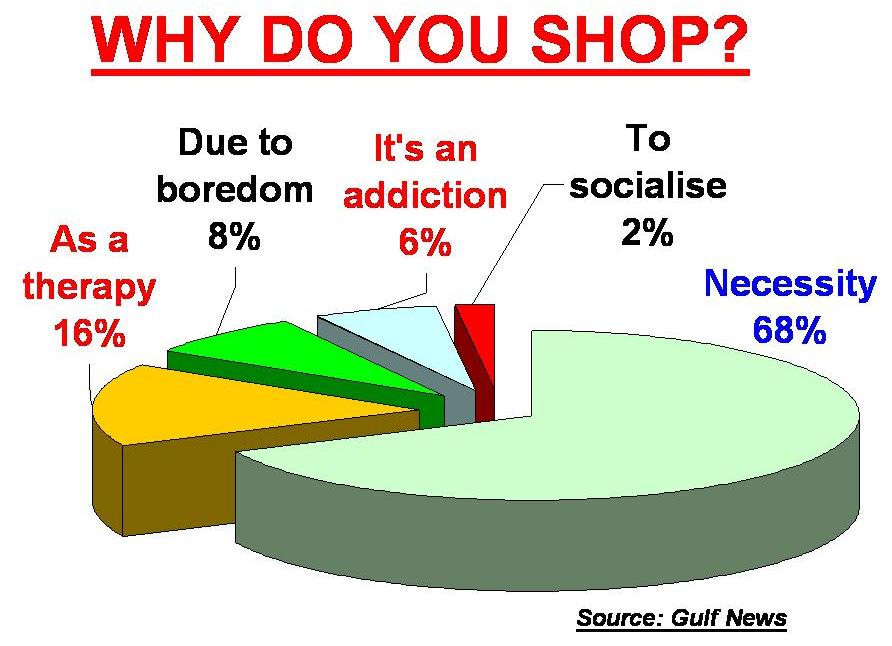
Recent articles in Gulf News and Medical News Today quoting American Journal of Psychiatry indicated that there may be 10 million plus people in US alone, who shop compulsively, placing their work, families and their mental health in jeopardy! And in UAE, going by lower rates for personal loans, frequent launch of attractive credit card promotions (sometimes even by Finance houses), pushing loans to boost bank earnings, and high growth potential for credit cards in the region, we may expect to have our own share of compulsive shoppers soon! In a recent online poll by Gulf News indicated that 16% of respondents do shopping as a therapy – for 6% it’s an addiction, 8% do it to tackle boredom and 2% do it to socialize.

Compulsive Shoppers are those people who "shop till they drop" believing that they will feel better if they do so, and often run their credit cards up to the limit. The behavior may result in interpersonal, occupational, family and financial problems in one's life. In many ways the consequences of this behavior are similar to that of any other addiction.

Looking at the scores of promotions running throughout the year, e.g. DSF, DSS, Ramadan, Eid, Christmas, GITEX, etc. and more, one might tend to think that UAE is indeed promoting more and more shopping! Celebrities coming to Dubai are often quoted saying: "…every time I've come here, I've emptied my purse". The big stores are always embarking on sales and marketing promotions, in order to attract more customers and increase the volume of business: more discounts, competitive prices; added value offers, etc. force the shoppers to buy certain goods – often by impulse.

Shopping in UAE often equates psychiatric treatment. It means different things to different residents; e.g. a cure to combat loneliness; a source of evening entertainment; a venue for a family outing; a source of enhancing one’s self-esteem; or sometimes...just to give rein to a compulsive disorder (see pie chart).


How to avoid shopping habit to degrade into a compulsion?

Although the importance of judging one’s own spending couldn’t be better highlighted, I’ve provided some additional links below to tackle the personal / psychiatric aspect of this.

On a socio-economic level, here are a few ideas worth exploring in UAE:

  1. Ceiling on the number of promotions in a year. For example, 2-3 grand promotions in a year – DSF, DSS and any other one. This will reduce the impulse to “grab the offer” every time.
  2. Ceiling on the extent of discounts advertised. Many a times we see “Up to 70% discounts” in the malls / outlets, which is rubbish! More realistic discount values will restrain the compulsion need for shopping.
  3. All Grand Events need not be equated to heavy promotion. Limiting promotional activities within the grand events will reduce the rush for shopping within those few days of shopping.
  4. Cut down easy loan availability on credit cards. Easy credit on credit cards is one of the worst nuisances existing in the market. Imposing stricter conditions to offer such loans as well as accepting such loans will create a lesser indebted society!
  5. Establish stricter / heavier collaterals on personal loans. This will limit personal loans to situations when you need them badly – not just to pay your credit card or buy that expensive watch! Hence creating a lesser indebted society again!
  6. Enforce stricter rules for Credit Card promotions. Restricting launches of rampant promotions will limit newer customers as well as limit spending on existing credit cards, thus affecting binge buying.
  7. Squeeze cash-flow in the market. Restricted cash flow will retrain spending and hence limit visits to shopping malls.
Some Useful Links:

ShareThis