07 December 2010

An honest start to keep Happy "happy"!

‘Happy to be in Dubai; I’ve a better life here’ – says Ms. Happy Bulosan (not her real name), a 22 year-old Filipina resident from Dubai. She and her name – Happy – represent the general state of mind of an estimated 2 million+ Filipinos working in the Middle East. Usually, whatever the time of the day or the place, if you come across a Filipino in the UAE / Middle East, you’d definitely find yourself being charmed by his/her good sense of simple humor, colorful, decent and stylish dress sense, and overall a “Happy-go-Lucky” attitude towards life in general.

In fact, whichever profession you find a Filipino Expat working in, you can be assured of one personality element vibrant in him/her: i.e. “Staying Happy”. So many times I return feeling good and contented after having spoken to / served by a Filipino – either due to a simple approach, or an ever smiling “May I help you” disposure. Even when you are upset for any kind of mishaps and reprimand a Filipino, you tend to get an honest “Sorry Sir! It will be taken care of; no worries!” Perhaps this is the sole reason why Filipinos have scored full marks in the hospitality and catering industry – where, unfortunately, many Expat Arabs have failed, despite their advantages in language and other skills vis-à-vis other Expats.

However, do the Filipinos – esp. a huge proportion of Filipino women – get their worth in compensation and treatment? I feel I’d not be the first one to say that they do not! Often they are hired for one job but the job-scope subsequently expanded, while salary remaining the same! Take the example of Happy: “When I joined here, my boss was very helpful, kind and considerate, and promised that I’d be able to leave office everyday at 6pm”, she says with a wry smile, but devoid of any complaints. “But I’m doing a lot more now, including accounts, finance, visa, supervising service technicians, office-cleaning and toilet-cleaning. Usually, I’m able to leave office by 8pm, but occasionally at 10pm. Only problem is that due to this I lose my car pick-up service.”

Or, take another case, as reported recently in Gulf News:
Salon owners allegedly force hairdressers, who are mostly women, to work long hours daily without rest. Some of them are even forced to double as cleaners. "We have to clean the place in addition to our working for long hours every day," said Amelia, a Filipina who works in a beauty salon in Ajman. Amelia said hairdressers usually sleep inside the salon itself.
Each year more than a million Filipinos leave their country to work abroad , and an increasing number of skilled Filipino workers take on unskilled work overseas – perhaps more so in the middle-east. In many countries, including the Middle East, many Filipino workers find themselves oppressed, abused, their pays and documents withheld, confiscated or hidden. Some others, esp. domestic helpers, are physically and sexually abused, or even murdered.

Many of the cases (like 2 examples above) go unnoticed and uncared for, in between the hustle and bustle of our lives in Dubai; so much so that many of us don’t even bat an eyelid when we see such a case happening in front of us! Why? Because we take each Filipino worker’s services for granted! For us they are just like necessary lubricants to keep our lives moving at every corner of Dubai – ready to be disposed off when the time comes – when they stop looking happy or are lost in their immense pain behind their otherwise non-complaining exteriors!

Can we really be just, in doing just anything for Happy or any of her fellow countrymen… the unsung heroes and service providers… ever? I feel we definitely can give it an honest start… by just returning their happiness – in simplest of ways possible! I’d be delighted to receive any ideas on this.


For comments posted on UAE Community Blog, click here.

23 November 2010

A question of Ethics and Sensationalism

My entry into the UAE blogging world was more or less inspired by Secret Dubai Diary; I was sort of a fan of her reporting / blogging style, and was even more impressed by the way she has been maintaining a parallel voice that was not restricted by state restrictions. In short, she really displayed the guts to come out as a bold and unbiased voice on everything that had the chance of tarnishing image of this young country.

At times, some of the posts were found inappropriate by the moral police and as a result, we are not able to access her blog directly within UAE. Undeterred, she continues to write - though less frequently - and one can read her blog thru a feed-reader or google reader.


A recent post however, started me thinking all over again - is it blogging, journalism, or sensationalism which she is doing these days? Consider this quote below appearing in a UK newspaper, which SD chose to excerpt in her post. The quote is from a lawyer turned hooker named Paige Ashley:
"My biggest one-off job was with three Arab businessmen at the Emirates Palace Hotel in Abu Dhabi," she said. "It's a seven-star hotel and everything is decked out in gold leaf. They paid me £20,000 for one night with all of them. By morning I was exhausted”.
Most likely the intent was to convey that Arab businessmen would go to any extent to sleep with a western woman - which indeed does reflect upon the society’s scum that need to be questioned upon and cleared. It also perhaps highlights the stereotypes held by the Arabs...

But then, what does a neutral person might also infer from the post? Here are some possibilities:
  1. Many western women seek Dubai as mecca of “prostitution behind the veil”?
  2. Best income solution for unsuccessful British career women during recession (or for that matter any time) is to get into sophisticated call-girl racket?
  3. Arabs welcome western (e.g. British) women expats in UAE /GCC with the one-track objective of getting them to bed in order to improve their own status?
  4. Many British women are opting for sex / flesh trade in GCC in order to live a normal respectable life elsewhere? (I heard of a similar situation applicable for East Europeans way back in 2001 – many of whom are well placed in top positions in some companies today)?
  5. If you want to make a fast buck in UAE – escorting /or flesh trade is the best solution!
It's a question of identifying the fine line between Ethics and Sensationalism. It’s true that the facts quoted in the post could very well be true! But perhaps Secret Dubai could employ many of her journalistic finesse to put it more palatable – instead of injecting sensationalism on the blogosphere or smearing Arab and Western communities in the country.

It would be interesting to know the reactions of fellow young Arabs on this issue – especially since they are inheriting one of the fastest growing young nations in recent times.


Some additional comments also appear in UAE Community Blog

16 November 2009

"United we stand for UAE"

I’ve been living here for the last 8 years now, and I can say that Public holidays here are primarily “Emirati affairs” - with the expatriates rarely participating in it like the way they do in developed countries. Instead, their celebrations are restricted to enjoying it just as a holiday.

Recently however, I saw some interesting developments that could change this attitude, and could perhaps also bridge the Local-Expatriate culture gap. The Al Mutahida campaign from Watani (the National Identity program) perhaps for the first time respects and highlights upon the shared destiny of all the UAE residents as a whole!

The purpose of Al Mutahida – which in Arabic means “United” – is simply, to bring all the people of UAE together, irrespective of cast color or creed. The campaign features a number of activities in form of Post Cards, Art competition, Exhibitions and Roadshows. See Al Watani on Facebook.

Any resident can collect a Post Card from Emirates Post Office, to greet UAE’s leaders and express solidarity with their vision of turning UAE into a contributor to world Peace and Prosperity. The free post card has spaces to fill resident’s name / contact details, along with a space for thumb impression. Residents have until now have known Post cards only as a way to win millions (thanks to a successful promotion). Thanks to al Muthaida, they would now have the chance to come closer to the illustrious leaders of this country.

The Art competition intended for all residents, aims to collect their personal / artistic interpretation of the word Al Mutahida. Selected entries will be displayed at the Dubai mall from 26 Nov- 5 Dec, along with the works of renowned artists of the country. I feel it’s an excellent chance for all the residents to display their hidden skills to established artists and representatives from the Art community. (The deadline, it seems, is 17th Nov.)

Long ago, in this column, I had commented on Dubai being more of a Fusion spot, and that progressing towards being a melting pot of cultures will take a long time. I feel one of the many reasons is the general lack of interest within the guest worker communities, for the nation’s heritage. To some extent, this attitude has grown over the years perhaps due to an Emirati’s latent “fear that an expatriate is going to impose his culture” on locals.

Well, perhaps this campaign might well be the first foot forward in allaying this fear. One small observation however... expatriates need an English website also, incidentally which, I could not locate.

(Click here for some comments posted in UAE Community Blog.)

10 June 2009

The Urgent Need for Therapy

These days, it's a common thread of discussion among most of the Expats - regardless of the direction they come from, to UAE. It could be any one of these threads:
- Did you hear "so and so" are leaving the country for good?
- You know i heard that there has bee 26000 one way departures in one week alone thru Emirates Airlines?
- I heard that your good friend and his wife lost their jobs together? What are they doing now?
- Hey, I heard that you still have not been able to get something to pull along... so what have you decided?
- Are you going to make a decision within the next 2 months? Let me know, I can get you a good price for your car...
- etc. etc.
I find that the most common undercurrent that flows among these discussions, is something to do with "How best we can capitalize on the exodus" - whether it's your friend, neighbour, sworn enemies, colleagues, professional friends, or just anybody. And more often than not, the questioner / initiator is also under some kind of pressure - either money, job, pressures etc. related to this recession.

However, it's rare to find someone who's putting in efforts in a small or big way to make a difference to the lives of the affected souls! (I'm not talking of an exceptional few who have been helping even before the crises began!).

No wonder then, that we hear of many people who have been badly shocked by the crises - some of these have been made redundant after 5-10 years of dedicated service to their companies! A few of them are so shattered that they're unable to decide whether and how to return to their respective countries. Fear, loss of confidence, depression, inferiority complex, etc. type of psychological problems haunt them every hour of their waking life.

Therefore, when one of my friends lost his job, and faced the same situation, I thought of trying to help him, and had some consoling sessions with him, his wife and children. With my limited knowledge, I could understand that this person (probably one of many others in UAE) has a terrible loss of confidence and self-respect, and needs some affordable means of urgent therapy, to even get ready for a final departure for his home country.

I'm sure there are many like him, and as such I feel majority among these Expat communities - especially from developing nations who managed /are forced to stay for a while in this country - need some kind of Psychotherapy or Psychiatric or friendly help, to cope up with the troubled times.

I'd like to invite all the readers to come up with their experiences on this forum / platform, so that we can offer similar help to the affected ones!

(By the way, I checked for some good institutions / clinics for this friend of mine; but probably regardless of their goodness they would not be able to help, since he's an Indian, and language or at least culture would matter in a big way to calm him down!
Hence would anyone of you have any suggestions for an Indian Psychiatrist / Clinical Psychologist who can help? You can write to me, replying thru this column)

17 April 2009

How to turn around bad publicity

Recently I read a very heated set of debates triggered by Sultan Sooud al Qassemi's article in the Independent Blog as well as repost of the same in UAE Community Blog.

The article and its follow-up comments are perhaps some of the never-ending Dubai-bashing exercise some of us have been mutely observing / reading for quite a few years now! Strangely, I find that whether it was the boom time or the current bust time that Dubai is experiencing, some of the commonly accepted ills are refused to be accepted by the so called "PR-generals" of the City state!

Here are just 2 of the truncated comments posted against the main article:
A couple of months ago my husband was made redundant in Dubai. He owed his company a portion of his housing loan, but his company owed him far more in unpaid salary/redundancy/ contract etc... They refused to hand this over until he paid up. We went to the Labour Tribunal twice (holding of passports is illegal in U.A.E law), Court, Police, Human rights... At the British Embassy we were told to pay up and keep quiet... if there was a family emergency in the U.K. my husband would not be able to leave the country. ...Perhaps Dubai jails would have more people in them if Emiratis were punished properly for the crimes they commit against expats. I could mention the case of the woman wilfully run over twice by an unnamed Emirati driving a Hummer who only received 10 years, reduced to 7 on appeal for premeditated murder... ..."
I lived in Dubai for many years... The bubble has certainly burst... Dubai was once a quiet, soulful town full of culture, opportunity and promise. In its' speed for greed and wealth it has now become the most artificial and superficial place on the planet... a haven for prostitution, slavery and vulgar displays of wealth. It makes 'sun city' look real! Prostitution is so rife, in this so called 'Muslim' country.... The Emiratis and their fellow GCC comrades seem to think any semi-attractive western woman under 40 in Dubai is on the game...
Slavery is rife and the conditions for construction workers are appalling. When you drive past the construction sites they look like the walking dead...
I feel there's a lot of truth in the above comments, since I myself faced the similar situations of dubainow, 7 years ago, which made me more cautious! Recently I visited Sonapur - which has now turned notorious after BBC documentary / report - and was shocked even by the overall state of things! You don't have to even go inside each labour compound - the mere location of the camps (adjacent to a massive graveyard), the dusty and muddy state of roads /approach and even the treatment given by RTA to these hapless laborers (e.g. the twin sheltered bus-stand nearer to emirates Road didn't have ACs) were signals enough for anyn new person to understand the contrasts one is encountering here!

Having lived in this country for so long, and to a large extent indebted to the growth I experienced, I fail to understand why these problems are dealt with a superficial attitude! Isn't it this lackadaisical attitude and the failure to attack these problems giving enough chances to the buzz creators to talk negative again and again?

No matter whatsoever way a community, city or a nation progresses, if the leadership is unable to uplift the bottom-most section of society, there will be increasing chances that sooner or later the economy is going to crumble! It's not only true for Dubai, but also true for all the developing as well as developed world! Similarly, if the people responsible to take control of the "cultural law and order" are not doing enough, soon the sense of security and peace - the two most prized possessions of UAE - will crumble!

Since this is a recession time, activities would far lower due to slower economic growth. Therefore it's the most opportune moment / time to sit back, listen carefully and start finding permanent solutions and acting on them with an iron hand! Go ahead! Stop losing out!

08 April 2009

How much skin-show is acceptable in UAE?

We live in UAE, within a melting pot of cultures and communities. Much as we like or hate it's idiosyncracies and problems, UAE does give many of the Expats the opportunities to live their lives in a way they'd perhaps not imagine in their home countries (otherwise they would not have come in the first place!). Thank You is the least we can say perhaps!

One of the things I've never been able to really fathom, is that despite being a Shariah compliant country, it closes it's eyes to many things, which perhaps many similar nations would not! One of these things I've always found unacceptable (though not obnoxious!) is the extent of skin show allowed in the printed materials / media. Even with a new code of conduct to tackle nudity in Dubai, majority of the people thought that the new code of conduct is ridiculous (polled by Kipreport.com)! Particularly, we see that the so-called "health" or "lifestyle" magazines are sprinkled with abundant dose of nudity in different forms, denoting "life" or "health" or "fitness".

Personally I've been tracking one of these magazines in UAE, and thought of posting this question in the UAE Community Blog (image above). I got overwhelmed by the comments / discussions that ensued on this piece, and was amused to see I'm not the only one!

While I'd like to thank all of those who put their hearts in this discussion, I'd like to still keep these questions open:

  1. Is it really the "only" way to promote health and lifestyle - regardless of the culture of the land in question?
  2. Is it not crass consumerism that's imposed / forced upon, to attract the 90% of the community who DO-NOT follow this kind of lifestyle?
  3. Aren't there better ways promote health and lifestyle - stylishly? Or is it the norm of the industry?
  4. Is there any other / better / different way to promote HEALTH and LIFESTYLE?

Looking for your responses.

Other Links: Dubai Code of conduct (full version); Dubai Issues List of prohibited public behaviour; Behave Yourself!

09 August 2008

7 step Salary negotiation for Dubai newbies

Over the last 2 years, the living costs in Dubai has multiplied - and so have the new job seekers! We all agree that Dubai has a charisma of its own, that attracts scores and scores of career makers, investors, the big-bold-beautiful, and what not!

However, perhaps in between the fast pace the Dubai life has become, all of us overlook the new comers - especially the not so priveleged - who dream of making and sustaining a "better" life than in their native countries.

Keeping them in mind, I had submitted a salary negotiation advice thread in DiscussDubai.com almost 2 years ago! I was amazed last week to see that this discussion page earned the highest number of hits (>7000) among all other topics! Such is the demand of Dubai as a career builder!

For all those who'd like to know the 7 steps for negotiation, here are the suggestions:

1) Unlearn your past experiences / expectations
2) Calculate your basic minimum needs first
3) Adjust with your “lifestyle” expectations
4) Do some homework
5) Always ask for a little more
6) Always get to know the complete package (and more)
7) Do not budge too lower than your expectations

For details on these steps, please Click Here

Many of you'd agree these are just plain simple suggestions - no big deal here! But it's really amazing that even after 2 years I still keep on getting personal messages asking for advice (and I gladly do give the!) before taking decisions.

Hopefully by including the above link on this forum some more people may get some help!

11 January 2008

How NOT to be ripped-off while taking a loan

Usually, for every new entrant in Dubai - i.e. one who has got an employment, got an accomodation and a bank account - applying for a personal / car loan is the 2nd most important step towards settling down.All the banks - esp. the MNC banks - know about this quite as well , and are sitting there just to grab you to make a kill! Most often the rate is the currently applicable rate in the country - but offers / add-ons / ripp-offs are all dependent upon who proves the smartest - the bank or you .

This post is all about making you the smarter (well that's how I feel - I might be mistaken).

1) Don't jump on to the very first "lucrative" offer, which is often linked with your credit card - These loans prove to be extremely costly - you tend to pay an extremely high rate of interest if you're not a good personal finance manager!

2) Look for at least 5-6 offers of local as well as MNC banks - Often quoted rates and benefits are better in case of local banks, since the govt. favors these banks to a large extent to make them grow.

3) Look for the "Interest Rate on Reducing Principal" rather than "Simple / Flat Rate" - Regardless of the simple flat rates quoted to you, the former is the process followed by every bank, not only in Dubai, but internationally. This falls under banking process. Hence look for the lowest applicable rate on reducing principal amount.

4) Look for the hidden fees - Often banks say there's zero processing fees. However, they might name it differently, saying that you' have to pay just X% as documentation charges. Clarify what other charges are applicable - esp. in case of banks which tend to offer easy loans and goodies.

5) Try to pay processing / documentation / other charges separately - Often banks are known to be notorious in adding up these charges into the principal, and then apply the interest while calculating the EMI. Logically, I don't see a reason why a customer should pay interests on these at all!!! Usually this charge ranges from 0.5 to 3%. A loan amount of AED 100,000 would therefore have a documentation fee of only AED 3000! If your flat rate is 8%, you'd keep on paying at the rate of AED 10 per month for the whole period of your payment plan - which is attrocious Hence, if you can, delay the first instalment of your EMI, but pay these "hidden" charges separately.

6) Look for the "Early settlement fees" - Often banks tend to have a high rate for early settlement - just to discourage a client to settle accounts earlier than the total period. Usually when a loan is approved and given, the interests charges on monthly basis serve as constant monthly incomes for the banks, which they don't want to let go.

7) Finally, Decide well on your type of loan - When you are new to this country, you might feel cautious not to get into a debt which you cannot handle. While it's necessary to have a car, the same could prove a liability a few months later, if (God Forbid) either you or company decides to let go / move on. If you're very confident of staying the whole period of your payback period in the country, then a Car loan to buy a car proves cheaper. If you feel you might not stay the full period, then a personal loan for the same amount would be helpful.

No one wants to buy a used car with EMI linked to it. Nor you can sell a car with a loan attached to it (practically the car is owned by the bank, not you) The bank too charges an extra fee (other than the Early settlement fee) in case of Car loans when you ask for settlement. A personal loan can be settled early at your own pace, which can be used intelligently in early settlement.

Lastly, you should consult a finance person to check and recheck if the EMI you are paying correctly recalculates the principal you were promised. I was quoted a flat rate of 3.95% on a car loan, with no processing fee. It was after many months I realized that finally, I'm paying 4.33% flat rate. By that time it was too late and all papers I signed, intelligently avoided mention of these finer aspects. Therefore, do find a way to cross check this!! (If you need a reckoner contact me)

Hope after reading the above, you would be doubly careful before taking a loan.
(Photo Courtesy) This blog spot does not have any relation to the photo source.

24 March 2007

Of multicultarism and discrimination

The subject of cultural integration has been debated upon quite a number of times, and it would continue to do so perhaps throughout the growing years of Dubai / UAE. The issue is whether Dubai is a cultural melting pot or whether cultural co-existence. I have talked about this subject in my columns here and here. However I came across a very interesting outlook from Marco Blankenburgh in an old issue of Time Out magazine. Marco's company Knowledge Workx specializes in what he calls "intercultural training", which I agree is extremely essential for the ever-growing population of Dubai.

He agrees that the problem of people not being able to adapt culturally is indeed a serious and growing issue. Especially now that the pressure on people, in terms cost of living and quality of life, is rising:
"We co-exist but don't really mix, and we assume that it is supposed to be this way. So if I appoint a boss from a certain nationality to lead a certain department, it's assumed that people from that nationality will start appearing and sooner or later they will be the majority. If you have a social event at your company, you typically see people from the same nationality grouped together and there is no real synergy among the team."

I feel he also voices a very commonly felt syndrome which is rarely accepted or given credence in public - that of racial discrimination at the work place. Despite claiming that they are "equal opportunities employer", majority of the companies either flout it openly or have numerous ways possible to justify their stance.

For example the recruitment process itself starts with "Western educated" or "Indian Male" as a few of the pre-requisities for some positions, and comparatively much lower salaries offered to some nationalities despite more experience, maturity and values offered in return. (See the blog posts here, here and here.)

Marco agrees too, that people should be paid equal salaries regardless of their nationalities:
"It helps to create true cultural synergy and attaches value to the individual's skills rather than their nationality. You can't do it overnight ... It is so entrenched that it could take years to change. Slavery was abolished 200 years ago but the effects of it haven't gone
away..."

Any other ideas, comments or points of view?

Photo Courtesy

26 November 2006

Take a pledge on Obesity

Today being World Obesity Day, I’m sure there would be some kind of opinions voiced from anyone who wishes to offer their pennies on the subject! Especially when UAE has a substantial number of residents who are already on their way to obesity! (Perhaps on my part I already gave my pennies away… see here and here and here).

However, the question that bothers me continuously is: Are we really serious enough on this issue? Almost on every second day we see some article in the newspapers talking about the subject, or see some dietician or a health official commenting on the issue with some authority! But any kind of concrete solutions are almost none! No wonder that 20% of high school children are facing an obese future in UAE (based on a Global School based Health Survey in UAE – conducted by WHO, UNAid, UNICEF and Unesco)

Gulf news perhaps attempted for the umpteenth time to put some sense among the masses – by targeting school kids as the most important segment to be prevented from this pandemic this time. You can see the coverage here, here, here and here.

Here are some important facts and information tid-bits from Gulf News:

1. 50% of school children eat fruit and vegetable at least once a day. These are the ones who have been taught the benefits of healthy eating.

2. 12% of kids aged 12-16 yrs are already obese in UAE, while 20% + are under risk of being obese.

3. Boys are more obese than girls; however the trend reverses for overweight children.

4. 20% eat shawarmas, biryani, carbonated drinks or high fat food at least twice a day!

5. 18% eat fast food at least thrice a week!

6. 25% of children are found obese in UK

7. 17% of kids aged 2-19 yrs are obese and 34% are overweight in USA

8. 5.6% of young adults in China are obese, while 17.6% are overweight

9. Suggested Top ten brain foods for youngsters: Fish; Nuts and seeds; Soya products; Pulses; Wholegrains; Broccoli; Organic eggs; Cheese; Fruits; Ostrich meat.

Taking these as responsible parents, let us take a pledge to consciously to prevent our progenies being affected by this pandemic

12 November 2006

Roads to Compulsive Shopping

Further to my previous post on this blog, there’s additional evidence that UAE indeed encourages binge shopping.

An in-depth report in Gulf News today, quotes AC Nielsen that:
  1. UAE boasts the 2nd highest number of per-capita recreational shoppers in the world: 30% of the consumers in UAE go shopping “at least once a week” (compared to 36% in Hong Kong)
  2. 49% of UAE consumers regard clothes shopping as a necessity chore – the highest in the world! - 13% find it therapeutic to shop for clothes
  3. An average UAE shopper takes 4 shopping trips every week, making a purchase on 7 out of 10 visits to the mall
  4. An average UAE consumer spends 127 hours per year in supermarkets alone!

As mentioned earlier, there's an increasing trend towards recreational shopping in UAE. Within the recreational shoppers, chances are great that there are many for whom shopping is an obsession / compulsion.

Currently, per capita shopping area in Dubai is 4 times that of USA! With the new malls in place, when the overall retail space in UAE quadruples by 2010, there will be even more chances that more and more people in UAE would be induced to shopping as a recreation than a necessity – hence again contributing stimulus for “Compulsive Shopping”.

Apart from some ideas proposed before, what else can we do to avoid the disorder taking over?

What's the future of "Family"?

“To be or not to be” - Hamlet’s famous dilemma could perhaps be well applied to the question of marriage and family today. With life becoming faster, and relationships more volatile, the dilemma of whether to have an arranged marriage or whether to sustain live-in relationships, is increasingly attracting more debate.

A recent report by Gulf News discussed the issue Pre-Marital relationship from the perspectives of various readers. As expected, it generated strong but mixed reaction. You can read them all here.

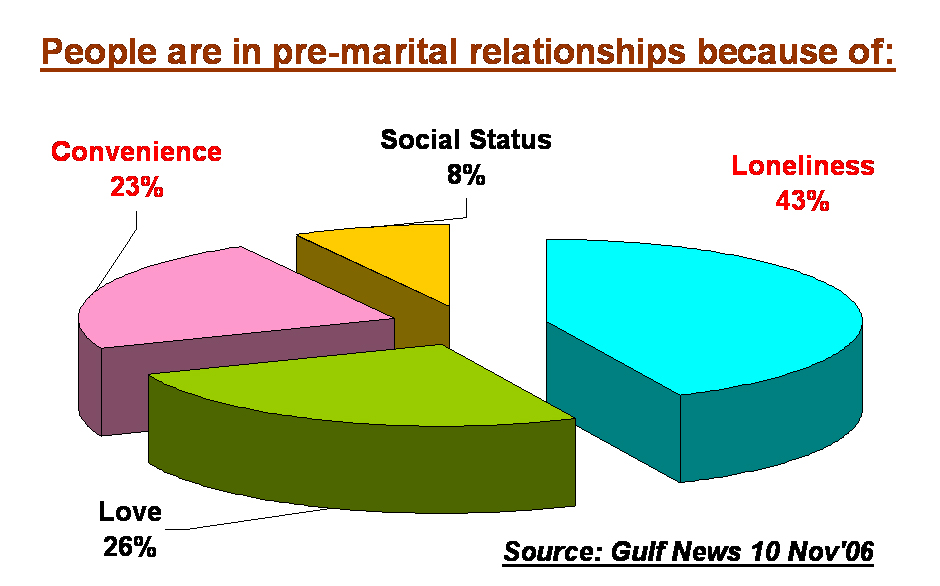
Why do people get into pre-marital relationships?
A Gulf News online poll indicated “loneliness” was the top reason (see pie chart). This may be true for a fast developing metro like Dubai, where there’s a substantial population of singles – who came here to shape their career and earnings. However chances are also great that most of these singles are into some kind of relationship with a similar partner – either in a live-in setting or otherwise.

In fact “live-in”, “single-mother” and “single-father” households are perhaps gaining in popularity worldwide. A recent US census indicated that for the first time in 6 years, marriage did not figure in nearly 50.2 % of American family households. It says that: “Unmarried couples gravitated toward big cities… while the farm states…and rural communities… remained bastions of traditionalism.”

Looking at the break-neck speed that Dubai is developing with, it wouldn’t be long when we’d see a similar trend here too. Modern lifestyle, Cost of living and Lengthy work hours force singles to indulge in casual, no-frills relationships, which stay away from getting married, just because responsibilities and social pressures of “married couples” are too much to cope up.

But since UAE law is based upon Shariah, how such relationships are allowed to exist in Dubai? Is it because another law discourages person to sponsor a married partner on basis of lower monthly income? Is there any trend that we’re looking at, but not accepting?

And talking of families, it is now a widely known phenomenon that - thanks to steep rise in rents and hence inflation - many of the middle-class households are breaking into singles – thus leaving the ground open for casual relationships among expatriates. Maybe soon we’d see “raising families” draw the least attention among priorities among Expats in Dubai. Again, is there anything we’re missing out here?

Your turn dear readers…

Price of Life!

Recently an Ajman court ruling on “sufficient compensation” for the death of a 5 year old schoolgirl immensely disturbed me. The court had refused the Indian parent’s claim of Dhs 3 million blood money, and thus ruled that Dhs 100,000 was a sufficient compensation.

The news started me thinking on some basic moral, judicial and human issues:

  1. How does one decide the price of a life? Especially a 5 year-old school girl?
  2. What would have been the case if the schoolgirl was a national? Definitely it would have been more?
  3. Is Dhs 100,000 enough? Or for that matter is even a Dhs 3 million enough?
  4. Can money really replace the life of a child?
  5. Or is the driver really punished if he pays a blood money, sent to jail and his licence revoked for a month?

Personally I feel that the price of life can never be equated against blood money. How can one really decide the price for a life on which rested the dreams of the parents, the years of emotional journeys of giving birth and seeing a life grow up? With all due respects for the judicial system of this country, while the law of paying blood money is definitely well respected, I do not think any jury (or any person) can decide the value of this.

While the final verdict is still subject to appeal to Supreme Court, what do you think of this? Let’s hear it…

(see comments posted on UAE Community blog)

Image Courtesy: http://images.scotsman.com
Technorati :. . .

31 October 2006

Is UAE promoting Compulsive Shopping?

Compulsive Shopping Disorder (CSD) is a psychological disorder which has gained increased attention in the West over the years.


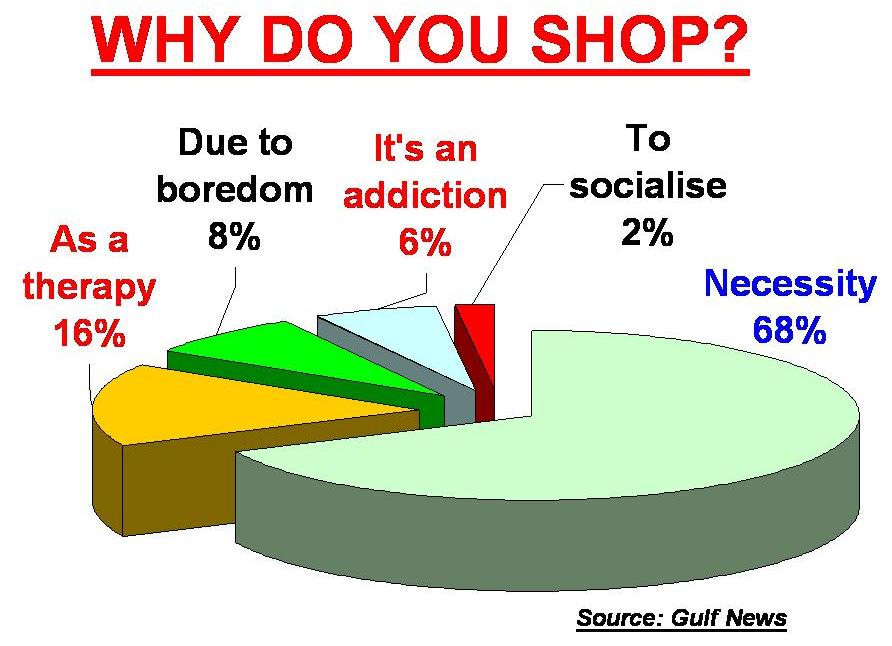
Recent articles in Gulf News and Medical News Today quoting American Journal of Psychiatry indicated that there may be 10 million plus people in US alone, who shop compulsively, placing their work, families and their mental health in jeopardy! And in UAE, going by lower rates for personal loans, frequent launch of attractive credit card promotions (sometimes even by Finance houses), pushing loans to boost bank earnings, and high growth potential for credit cards in the region, we may expect to have our own share of compulsive shoppers soon! In a recent online poll by Gulf News indicated that 16% of respondents do shopping as a therapy – for 6% it’s an addiction, 8% do it to tackle boredom and 2% do it to socialize.

Compulsive Shoppers are those people who "shop till they drop" believing that they will feel better if they do so, and often run their credit cards up to the limit. The behavior may result in interpersonal, occupational, family and financial problems in one's life. In many ways the consequences of this behavior are similar to that of any other addiction.

Looking at the scores of promotions running throughout the year, e.g. DSF, DSS, Ramadan, Eid, Christmas, GITEX, etc. and more, one might tend to think that UAE is indeed promoting more and more shopping! Celebrities coming to Dubai are often quoted saying: "…every time I've come here, I've emptied my purse". The big stores are always embarking on sales and marketing promotions, in order to attract more customers and increase the volume of business: more discounts, competitive prices; added value offers, etc. force the shoppers to buy certain goods – often by impulse.

Shopping in UAE often equates psychiatric treatment. It means different things to different residents; e.g. a cure to combat loneliness; a source of evening entertainment; a venue for a family outing; a source of enhancing one’s self-esteem; or sometimes...just to give rein to a compulsive disorder (see pie chart).


How to avoid shopping habit to degrade into a compulsion?

Although the importance of judging one’s own spending couldn’t be better highlighted, I’ve provided some additional links below to tackle the personal / psychiatric aspect of this.

On a socio-economic level, here are a few ideas worth exploring in UAE:

  1. Ceiling on the number of promotions in a year. For example, 2-3 grand promotions in a year – DSF, DSS and any other one. This will reduce the impulse to “grab the offer” every time.
  2. Ceiling on the extent of discounts advertised. Many a times we see “Up to 70% discounts” in the malls / outlets, which is rubbish! More realistic discount values will restrain the compulsion need for shopping.
  3. All Grand Events need not be equated to heavy promotion. Limiting promotional activities within the grand events will reduce the rush for shopping within those few days of shopping.
  4. Cut down easy loan availability on credit cards. Easy credit on credit cards is one of the worst nuisances existing in the market. Imposing stricter conditions to offer such loans as well as accepting such loans will create a lesser indebted society!
  5. Establish stricter / heavier collaterals on personal loans. This will limit personal loans to situations when you need them badly – not just to pay your credit card or buy that expensive watch! Hence creating a lesser indebted society again!
  6. Enforce stricter rules for Credit Card promotions. Restricting launches of rampant promotions will limit newer customers as well as limit spending on existing credit cards, thus affecting binge buying.
  7. Squeeze cash-flow in the market. Restricted cash flow will retrain spending and hence limit visits to shopping malls.
Some Useful Links:

27 October 2006

More thoughts on Obesity (UAE)

Obesity is a subject that keeps on popping up time and again all over the world. I have commented upon this twice before (see here and here). Gulf News alone gave 100 matches related to obesity (Jan-Oct'06), while the New York Times had 33 matched articles for the last 30 days.

As a resident, I feel there are some ready indicators which safely point towards possible reasons for obesity in UAE. Fast-food and Eating Habits are definitely two of the important reasons.

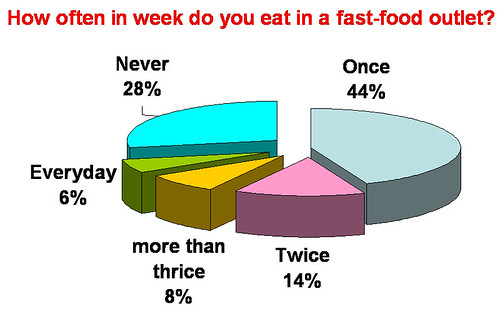
A recent online poll done by Gulf News gave some interesting results on “use of fast food outlets” in UAE (see the attached pie-chart):

1) A whopping 72% of the respondents polled in favor of eating in a fast food outlet at least once a week!
2) Almost half of the respondents definitely eat in a fast food outlet once a week
3) 6% of the respondents use a fast-food outlet everyday of the week.

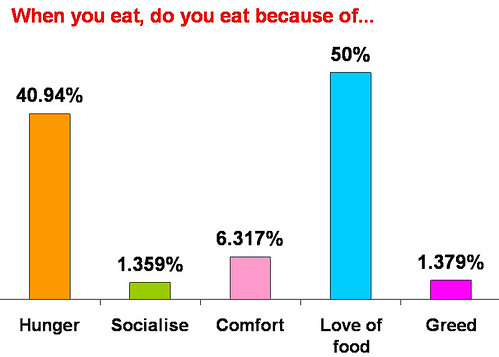
A second poll threw some light on the Eating Habits (see the bar chart):
Half of the respondents said they eat because of love of food – 6.3% said they eat because of comfort, while 1.4% each eats because of greed and socializing.

Although the sample-size of the polls is not available to me, I feel the above are good indicators worth pondering upon. For example, if one considers the Emirati community today, obesity is the most alarming! Considering a vast majority of the locals is aged 15-25 years, it’s easy to understand why. Most often than not, one finds group of young men – some of them are at least overweight - are socializing in fast-food joints.

Similarly, if one looks at the subcon families, one again finds that the usual “daily outing” happens to be the fast-food joints! Parents are more often than not overweight. And some of the children are found to be excessively out of shape compared to their ages!

As expressed earlier, my personal opinion is that pricing of food, especially ready-made / fast-food need to be re-looked at, especially in UAE – if not in the whole GCC region! Tax-free income (even though salaries refuse to rise!!), expensive ready-to-wear apparels, recreation opportunities, entertainment, etc. make fast-food the last inexpensive resort to spend money upon. The result? You order more, eat more and waste more… just to have a weekend high! If the fast-food / read-made food is priced higher than usual, the excessive expenditure on fast-food is bound to reduce – thus affecting obesity too!

I know the above solution seems too simplistic or "easier said than done"! However, I open the house to readers to submit more ideas for the benefit of the young nation. Here to you, readers...

20 October 2006

Debating Dubai's Distinctiveness

John B. Chilton, who's writes the Emirates Economist blog, has posted a NYT article on Dubai on UAE Community Blog, which, sort of validates my oft-voiced contention that in its mind-blowing -speed growth initiatives, Dubai - and to some extent UAE as a whole - is fearing the loss of its grip on its Arab identity.

Some quotes from the article:
  • “We fear that the expatriate is going to impose his culture on us,” said Maya Rashid Ghadeer, a columnist with the daily Al Bayan in Dubai who writes about the local community. “Most locals are afraid that they are losing their basic identity forever.”
  • "Usually minorities assimilate into the majority,” Mr. Abdulkhaliq Abdallah (a professor of political science at UAE University) said. “But we don’t want to assimilate into the majority. We want to preserve the localness, the Emiratiness of this city.”
  • “There is this pressure to stake out your claims, especially with the locals,” Mr. James Piecowye - a radio talk show host said. “There is more and more pressure to say, ‘This is how things should be.’ ”
The article raises a few very interesting and thought provoking questions that I would like to pose to the readers:

1) How much permissive Dubai should be? - I guess in it's strategic efforts to draw attention and business, it has stopped considering that it's a Muslim state governed by Sharia laws.
2) Does Dubai really have any deep-rooted culture that can be sustained? - As a city-state, it has all signs of a flourishing metro culture, but sadly, no "Arabic culture", that Sharjah / Abu Dhabi enjoy.
3) Does Dubai at all wants to be recognised as an epitome of Arab culture and values? - I guess not! Showcase to some extent, yes, but not a live example of GCC Arab culture which can be practiced / assimilated. Much of its showcased culture is often meant for sale to Western world - not for adoption.
4) How much Dubai closer to UAE? - Yes, it enjoys the position of a commercial capital of UAE, a conduit for Western entry to UAE; But it is more recognised as a wealthy priveledged brother of UAE.

I feel therefore, that no matter how the professors / intelligentsia / social thinkers would like to talk or debate about it, Dubai has come too far to sustain the deep Arabian flavour in it's identity. Any move to enforce the strict rules of Sharia law, a-la-Saudia, runs the risk of violent opposition, thus severely affecting its marketability to the Western World, plus negatively affecting the overall economy of the region.

Any other opinions?

18 October 2006

Microcredit Revolution in the MiddleEast?

I hope I’m not too late in blogging about it, but I read an interview of Dr Yunus, which assured me that potential of Microcredit in Middle-East is recognized well! Read the full interview and support article from Gulf News.

A few key points from the coverage are as follows:

  1. One of the ways Microcredit net was expanded was through “Word-of-mouth” marketing: you hear your neighbors benefiting from the scheme, and decide to enter the scheme yourself. (I feel same process will succeed in this region too, esp. among worker class)
  2. Initially the scheme was never thought out on a scale it is done today. Dr Yunus just kept on finding solutions arising out of day-to-day field problems and it kept on getting better
  3. Jordan is the first one to set up a Microcredit company, (JMCC) – launched by Queen Rania with Dr Yunus on the advisory board. Egypt (Al Tadamun, RADE) and Yemen are also introducing the scheme as a part of their poverty eradication strategy
  4. Good news is that KSA (through PFP) – the largest among GCC countries - will also see Microcredit being implemented in certain areas soon. “Grameen Trust” organization is ready to support any initiatives in any other GCC / Middle-Eastern countries
  5. Conventional Banks can also open the doors to the poorer borrowers (a point that I raised in my previous post below), by framing supporting rules. However this will lower their profit margin – benefiting the have-nots.
  6. Remittance business is an area where Grameen Bank would be interested to enter. This perhaps would reduce dependency on non-banking modes of money transfers (that I talked of before)
  7. Although Libya, Malta and 6 GCC countries have highest per-capita income (~ $4000) there are 12 other active / potentially active World Bank borrowers, with per-capita incomes between $330-2,870.

I feel Microcredit scheme could really change the face of economic reforms in all the WB borrowing / non-borrowing countries. It all depends how the potential of the scheme is recognized and implemented in each economy.

One other point worth musing about is that except KSA, all other GCC countries are very much dependent on expat workers for the growth of their economies. Majority of these workers are from developing Asian economies. Therefore is it possible to have any significant change in economic outlook, should microfinance schemes are allowed to operate among these workers? Does it also improve the forex outlook of the parent countries of these workers?

I guess I need expert / specialist opinions from the blogosphere…


Some more useful Links on Microcredit:

  1. Business loans for Jordan's impoverished women
  2. Egypt: Combating child labour through micro-credit
  3. Best piece on what we know about micro-credit
  4. Nobel Peace Prize announcement story in NYT by Celia W.Dugger (2006)
  5. Article and case study on whether Microfinance really work (Indian story)
  6. Hal R. Varian’s Commentary in NYT on the economics of Microcredit (2001)

Technorati :. . . . .

15 October 2006

Needed - a Dr.Yunus for every Gulf state!

The awarding of Nobel Prize for Peace (instead of Economics) to Dr Mohammad Yunus could perhaps be one of the many controversial decisions that the Nobel Prize Committee has taken for the Peace prize over the years. However, it cannot be denied that Dr Yunus well deserved this kind of world recognition – esp. since his feat and achievement is perhaps a slap on the face of conventional banking as we know it! Ever since I read about him in "The 8th Habit" - a book by Stephen Covey, I’ve been feeling a mix of excitement and agitation.

“Microcredit” – the core system he pioneered and implemented in his “Grameen Bank” is perhaps not something new. In simplest terms, we all lend small amounts of monies to friends / acquaintances for a short period, against trust / emotional bonding we develop with them. However the flesh and blood he has put into the idea is a success story in itself.

The system has been copied in more than 100 nations, and even though economies of UAE / GCC are far stronger than Bangladesh, I feel the model can be utilized in this region too!

Majority of the banks in the Gulf region (kindly correct me) seem to be operating on “profit” model of business – i.e. “if you have a collateral we can give you a credit; if you want to manage your small finances, then pay us for the service; however sorry - no interests will be paid against your savings deposits with us!”

The result? Majority of the Expat savings are never kept in the banks for a longer periods; they are instead remitted to their home countries where they are able to invest and earn. And if that Expat happens to be the hapless laborers / construction-site workers – then even a bank remittance is avoided due to the fee involved! The meager savings are then invested in illegal, but close-knit groups known as “kitty” or “committee” or "society". Depending on the number of members, one can have the money back within 6-12 months or temporarily multiples of it, at any time.

However, come to think of this – if every person could approach a Dr Yunus (or his institution) operating in every Gulf country, then all the low paid Expats (e.g. site workers / laborers / maids etc.) would have preferred to keep the money here for a longer time, utilized it to the benefit of this country’s economy (in whatever little ways they can!) and had benefited themselves too to some extent. Simply a win-win situation for everybody!

To give an example, the outward remittances from the Gulf reached Dhs 213.15 billion in 2004-05. Assuming just 20% of this represents remittances from the low-salaried workers, who usually remit either in bulk or through trusted hands (not banks), at least a quarter of this money (or Dhs 10 billion) could be utilized! It could perhaps be in form of short-term investments, e.g. small-scale businesses, involving these workers, who’d love to recycle their monies, rather than working multiple shifts to earn that extra buck (see examples here and here)!

Doesn’t it make sense?

I currently do not have the statistics of unskilled low-wage earners in UAE to calculate how it could affect UAE alone. So stay tuned till I find some more data.

ADDENDUM:
Gulf News Print editorial today rightly comments "...It wasn't about money... It was about respect...". I strongly feel that here's a chance to give that respect to thousands of deprived Expat workers here.

(read comments on the article in UAE Community Blog)

Some useful links:

07 October 2006

Obesity - the fast-food link

A few weeks ago, I had pondered about obesity among GCC nationals. Some startling facts published today reassure me that one of the most important causes indeed is Diet.

Consider these:

- There are 315 fast food outlets in the UAE; 43 of these are McDonald’s alone!
- One single Hardee’s outlet sells 20,000 burgers per day!
- In 2004, total sales recorded for GCC fast-food market was US$ 600M! UAE’s fast food market is estimated at US$117M
- At least 26% of UAE residents eat at a fast-food joint once a week! This figure shoots up to 65% in case of Emiratis and Expat Arabs!

The facts raise a few questions which are worth pondering about:

1) Could there be a possibility of a “Food Law” that restricts the menus (or ingredients) of these fast-food joint? Knowing that obesity is high among Emiratis and fast food contribute largely to this menace, I feel this kind of law would be in best interest of all residents

2) Is there a possibility that Food companies and MNCs are requested to launch “good food habit” campaigns targeted primarily to the parents of school-going kids? Knowing the revenues generated from the Gulf food sector esp. during Ramadan and festival times, I feel it would be easier for Govt. lobbies to convince these companies.

3) Is there a possibility of restricting the growth of “unhealthy” fast-food joints in favour of “healthier” ones? Growth of Fast-food culture is fuelled by the growth of mall culture in GCC. Perhaps by looking at the menus and ingredients, a certification could be imposed as “necessary” to have a shop in the malls.

Any more ideas on this?

See UAE Community blog discussions on this post. Photo Courtesy: Gulf News

Technorati :. . . . .

30 September 2006

Needed - an honest debate

There's a very thought provoking article from the celebrated NYT editor, journalist and author, Thomas L Friedman, that was reproduced in Gulf News print edition today. (Unfortunately, it is not available free online - not even in NYT)

It talks about the fundamental issue of Muslims attacking Muslims, which has perhaps heavily tarnished the image of Islam as a compassionate religion and repeatedly increased the distance between Muslims and Non-Muslims.

"Part of the problem in getting answers is that Islam has no hierarchy. There's no Muslim pope defining the faith. There are centres of Muslim learning, in Egypt and Saudi Arabia, but their credibility with the masses is uneven because they're often seen as tools of regimes"

He feels that "...there's a huge body of disenfranchised Sunni Muslims, who are neither violent fundamentalists, nor wannabe secularists. They are the people who'd like to see a marriage between Islam and modernity. But right now there's little space in the Sunni world... for that synthesis to be discussed and defined".

When I see the progressive Arabs and non Arab Muslims here in UAE, I tend to agree with Friedman. I feel UAE, by lieu of its economic status and a model of progress, could take the first step towards initiating a debate within the Muslim community to find a common progressive message for the world.

No sensible Muslim - who has understood the teachings of Islam - would want to see violence as an precursor to solutions. Like all other communities of the world, all the Muslims also like to share, enjoy, and live life in peace, friendship and togetherness. Isn't UAE one of the best examples of this?

(Note: This post was also published in UAE Community Blog. Thanks to the media pirate, the original Friedman article appears here under Comments section)

Technorati :
. .

ShareThis